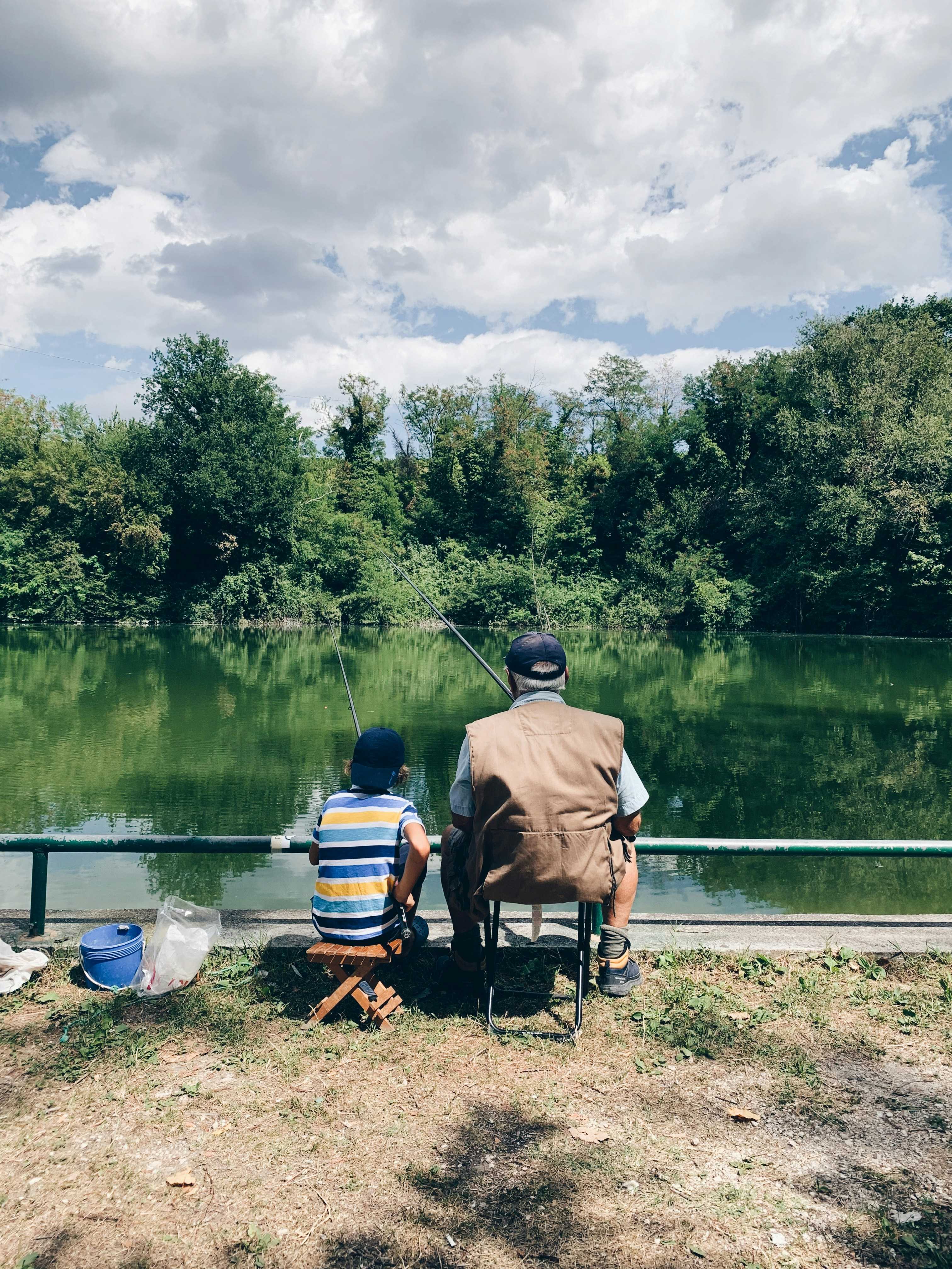
As disciples and disciplers, God has entrusted people into our care. Are you feeding them fish or teaching them to fish? In other words, are you feeding them God’s Word or are you leading them to discover how to feed themselves from God’s Word? Babies need to be fed. The mature learn to eat meat and to feed themselves. Paul reminds us in 1 Corinthians 3:2 (CSB):
I gave you milk to drink, not solid food, since you were not yet ready for it.
Teaching Them to Fish
Too often we have made children, teens, and adults dependent on us as pastors, teachers, and disciplers. We have spoon-fed (or bottle-fed) them. We did all the study and we never helped them to learn how to do it for themselves. Our lessons and sermons have been testimonies of what we learned. Instead of a testimony, they need a first-hand experience with God in His Word. Our testimonies may inspire. Our disciples may learn facts. But what they really need is a life-changing encounter with God in His Word.
A Lesson from the Life of Moses
In Exodus 3, God used a burning bush to catch Moses’s attention. And when Moses turned aside to see why the bush was not consumed (v. 3), God called Moses by name and and told him not to come closer and to take off his shoes because this was holy ground (vv. 4-5). What is the lesson? When we open God’s Word, God speaks to us. He knows us by name.
As we read further in the chapter, we see that God has observed the misery of His people in Egypt and says He has come down to rescue them from the power of the Egyptians (v. 8). But Moses has a part to play in what God plans to do (vv. 10ff). What is the lesson? When God speaks to us, He expects a response and there is often an adjustment necessary as a result.
Reading even further, we see that Moses begins to offer objections (vv. 11, 13, 4:1 , 4:10, 4:13), and God responds to every one. What is the lesson? God has a plan; we have a part; He has big shoulders and can handle our questions. The only unacceptable response is to say “no.” In the encounter in Exodus 3, when Moses asked God to send someone else, that is when God’s anger burned against Moses.
Summary of Lessons
When God speaks, He expects a response. Initially, that may be prayer or a verbal response. He seeks agreement, and ultimately He expects action, obedience. Anything less than obedience, including a lack of response, is disobedience. (Think Jonah.) We need each other to challenge us to live out what God has commanded.
It’s Easier to Fish in Smaller Ponds
In my experience, it is easier to lead our disciples to meet God in Bible study and respond to Him in groups of 2-6 people. Groups of that size tend to get everyone involved. Groups beyond that size often have people who never verbally participate and often are less engaged in the lesson. This is not a criticism of groups larger than 6. Rather, I offer a challenge for larger groups to spend a portion of every lesson in smaller subgroups: pairs, triads, or groups of 4-6. Are you teaching them to fish for themselves? What if everyone left your group time with a plan for how God wants them to obey Him?
Evaluation Questions
Have you taught your people how to listen for the still, small voice of God? Do they know He has a personal message for them every time they open His Word? Do they understand He expects a response (like He did from Moses)? Have you taught them to pray, agree, and obey? Do you need to spend some lesson time in groups of 2-6? As teachers, disciplers, and groups, we need to be encouragers for each other to respond and obey.
What if at the start of the next lesson you asked;
- What was last week’s lesson about?
- What was the point of last week’s lesson for the original hearers?
- What was the point God wanted you to hear?
- What did He expect you to do as a result?
- Did you do it?
What if you shared how you responded to what God said to you? They won’t be prepared until you model this for them. Teach them to fish. Teach them to feed themselves on God’s Word. Make disciples. Be revolutionary!
Photo by Federico Giampieri on Unsplash


Leave a Reply